

Brie: for many people, it’s the first soft French cheese they ever tasted. A white rind covered in velvety mold, a creamy, melt-in-your-mouth interior, and an aroma that ranges from mushroom to old cellar. But what exactly is brie, what’s the difference between brie and camembert, and is it safe to eat during pregnancy? We’ll walk you through it.
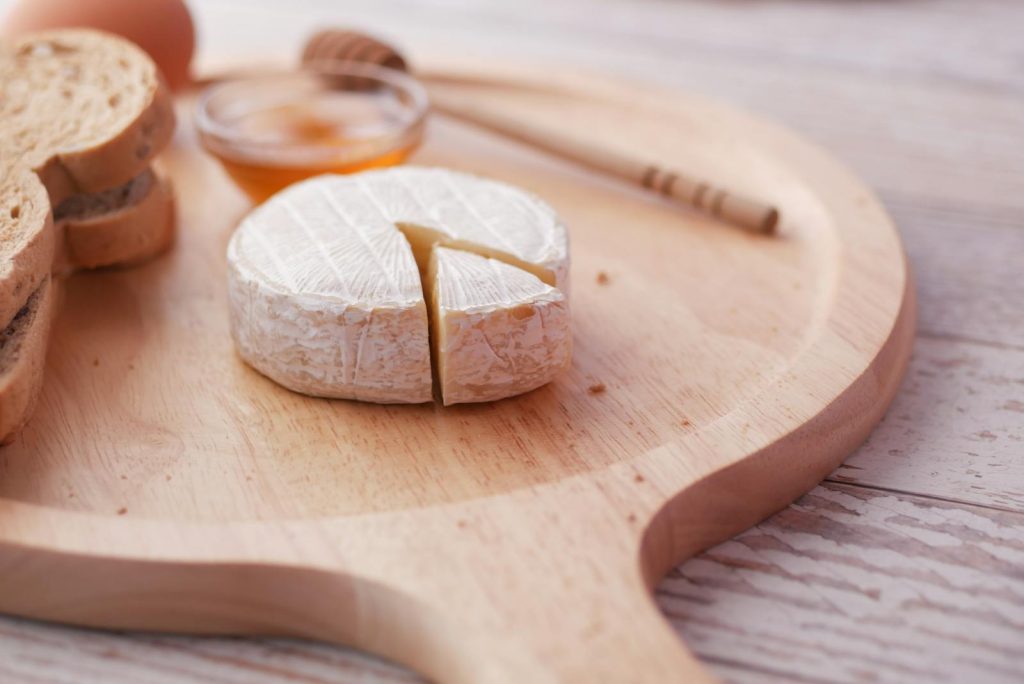
What exactly is brie?
Brie is a soft French cow’s milk cheese with a white-mold rind. It originates from the Brie region, east of Paris, and has been made since the Middle Ages. According to legend, Charlemagne was already a devoted fan, and Talleyrand once called brie “le roi des fromages,” the king of cheeses.
The white rind is no accident. It forms from the mold Penicillium camemberti, which grows on the surface and ripens the cheese from the outside in. That’s why brie becomes soft and creamy toward the center, not the other way around. It’s a defining characteristic of white-mold cheeses.
See also our white-rind cheese guide.
Brie de Meaux, Brie de Melun, and everyday brie
In the Netherlands, “brie” is often used as a catch-all term, but in France there are clear distinctions:
- Brie de Meaux AOP: the best-known PDO brie. Large, flat wheels of about 36 cm in diameter and 2.5 kg, aged for a minimum of four weeks. Rich, creamy, with a pronounced mushroom aroma. From the Île-de-France.
- Brie de Melun AOP: smaller (27 cm), slightly firmer and more intense than Meaux. Made with natural rennet using a traditional, slower method. Aged for ten weeks, with a more pronounced flavor.
- “Brie” (no AOP): the brie you’ll find in most Dutch supermarkets. Often well made, but without the strict PDO rules governing milk, aging and origin. Perfectly enjoyable, just milder.
Brie or camembert: what’s the difference?
These are the two most frequently confused French white-mold cheeses. They look remarkably alike but are fundamentally different:
- Brie comes from Île-de-France (the Brie region). Made in large, flat wheels (27–36 cm). The flavor is more refined, creamier and milder.
- Camembert comes from Normandy. Made in small, round wheels of 11 cm. The flavor is more intense, often with a stronger mushroom and earthy cabbage aroma. Authentic Camembert de Normandie AOP is made from raw milk.
Both use the same white mold, but the size (large versus small), milk-producing region and aging time result in very different end products. If you’re new to white-mold cheese, start with brie. If you want more character and complexity, go for camembert.
How is brie made?
The process in brief:
- Milk: cow’s milk. For PDO versions (Brie de Meaux AOP), traditionally raw milk. For most supermarket versions, pasteurized.
- Coagulation: using natural rennet.
- Molding: the curds are gently ladled into round molds (not pressed, as that would destroy the creamy texture).
- Drying and salting: a few days of resting and dry salting.
- Inoculation with white mold: the surface is sprayed or dusted with Penicillium camemberti spores.
- Aging: a minimum of four weeks in a humid ripening room. The mold grows, the rind turns white, and the interior gradually becomes more fluid.
Brie is a living cheese: buy it at the moment it has exactly the right amount of give. Too young and the interior is firm and chalky. Too old and it turns runny with a strong ammonia smell.
Can you eat the white rind?
A question we hear all the time. Yes, you can absolutely eat the rind and really, you should. The rind is part of the flavor, aroma and texture of brie. It’s completely edible and contributes to the complex, creamy character. The only time to skip it is if the cheese is clearly past its best, with a sharp ammonia smell and a sticky, slimy rind.
Is brie healthy?
Brie is nutritious, but it’s not a light cheese:
- Protein: 20–23 grams per 100 grams.
- Fat: 27–30 grams per 100 grams, which is high. Brie is a full-fat cheese through and through.
- Calcium: a good source.
- Lactose: contains some lactose, but less than fresh cheeses.
- Salt: relatively mild compared to feta or pecorino.
The combination of high fat and protein makes brie satisfying: a small piece goes a long way. If you’re watching fat or calories, it’s not an everyday staple, but it makes a wonderful treat.
Brie during pregnancy: what’s the advice?
This is where you need to be careful. Brie falls into the category of soft mold-ripened cheeses, where the pregnancy advice differs from that for hard cheeses:
- Raw-milk brie (Brie de Meaux AOP and other artisanal versions): avoid. The high moisture content and shorter aging time create conditions where Listeria can multiply.
- Pasteurized brie: the Dutch Voedingscentrum advises avoiding pasteurized soft mold-ripened cheeses during pregnancy as well, because Listeria can still be present through post-pasteurization contamination during production.
Bottom line: avoid brie during pregnancy. If you’re craving a French cheese experience while pregnant, opt for a hard, long-aged cow’s milk cheese such as Parmigiano Reggiano or a good aged farmhouse cheese. Check out our article on what Parmesan cheese is, that one is safe.
Want a complete overview? Read our guide on which cheeses are safe to eat during pregnancy.
What goes well with brie?
Brie shines on a beautiful cheese board and in the kitchen:
- On a cheese board: pair with grapes, figs, pears or a drizzle of honey. The sweet notes bring out the creaminess.
- On bread: a thick slice of brie on a baguette with a thin layer of fig jam or honey. Simple and perfect.
- Baked: 10 minutes in the oven at 180°C with honey and pecans. A classic for the holidays.
- In a croque-monsieur: in place of regular cheese.
- With red wine: a rounded red (Bourgogne, Beaujolais, Pinot Noir) or a sparkling wine. Champagne and brie is a classic pairing for good reason.
- With cranberry compote: especially around the holidays. The sweet-tart contrast cuts right through the richness.
One important tip: always serve brie at room temperature. Take it out of the fridge 30–60 minutes before eating. Cold brie is virtually tasteless. It only reaches its full potential at 18–20°C.
Need help building one? Read our guide on the perfect cheese board.
For more pairings, read our guide on cheese and wine — the best combinations.
Our cheeses
Brie isn’t part of our permanent range at Cheese In A Box. To do white-mold cheese justice, you really need a supply chain where ripening is closely monitored, which doesn’t suit our fresh-cut-to-order approach. That said, if you’re putting together a cheese board, we have some excellent alternatives:
- Parmigiano Reggiano: for character and intensity.
- Pecorino: Italian sheep cheese with a savory bite.
- Gorgonzola Dolce: a soft blue cheese that would sit beautifully alongside brie on any board.
- Gorgonzola: sharper and bolder, for the adventurous cheese lover.
Want to discover a new artisanal cheese every month? Our cheese subscription delivers a surprising selection of cheeses with every order, from Dutch farmhouse cheese to international classics, straight to your door.
{ “@context”: “https://schema.org”, “@type”: “FAQPage”, “mainEntity”: [ { “@type”: “Question”, “name”: “What is the difference between brie and camembert?”, “acceptedAnswer”: { “@type”: “Answer”, “text”: “Brie comes from Île-de-France and is made in large, flat wheels of 27–36 cm: more refined, creamier and milder in flavor. Camembert comes from Normandy and is made in small, round wheels of 11 cm: more intense, with a stronger mushroom and earthy aroma. Both use the same white mold (Penicillium camemberti), but size, region and aging time produce very different results.” } }, { “@type”: “Question”, “name”: “Can you eat brie during pregnancy?”, “acceptedAnswer”: { “@type”: “Answer”, “text”: “No, the Dutch Voedingscentrum advises avoiding brie during pregnancy. Brie falls into the category of soft mold-ripened cheeses, where Listeria can be present, including in pasteurized versions through contamination during production. Safe alternatives include long-aged hard cheeses such as Parmigiano Reggiano or aged farmhouse cheese.” } }, { “@type”: “Question”, “name”: “Can you eat the white rind of brie?”, “acceptedAnswer”: { “@type”: “Answer”, “text”: “Yes, the white rind of brie is completely edible and an integral part of the cheese. It consists of Penicillium camemberti mold, which ripens the cheese from the outside in, and contributes to its flavor, aroma and texture. The only exception is if the cheese is past its best, with a strong ammonia smell and a sticky surface, in which case it’s better not to eat it at all.” } }, { “@type”: “Question”, “name”: “What is Brie de Meaux?”, “acceptedAnswer”: { “@type”: “Answer”, “text”: “Brie de Meaux AOP is the best-known PDO-protected brie. Large, flat wheels of about 36 cm in diameter and 2.5 kg, aged for a minimum of four weeks in a defined area of Île-de-France. Rich, creamy and with a pronounced mushroom aroma. Traditionally made from raw cow’s milk. Alongside Brie de Meaux, there is also Brie de Melun AOP, which is smaller, firmer and more intense.” } }, { “@type”: “Question”, “name”: “What is the best way to serve brie?”, “acceptedAnswer”: { “@type”: “Answer”, “text”: “Always serve brie at room temperature. Take it out of the fridge 30–60 minutes before eating. Cold brie has very little flavor; it only comes into its own at 18–20°C. Classic pairings include bread with fig jam or honey, a cheese board with grapes and pears, baked in the oven with honey and pecans, or alongside a red wine (Pinot Noir, Bourgogne) or Champagne.” } } ] }Or discover our Dutch pride: read about what farmhouse cheese is — our strongest category.