

Parmesan cheese: for many people, the Italian cheese. A pinch over your pasta, a few shavings on carpaccio, or just a chunk alongside a glass of wine. But what exactly is Parmesan cheese, how is it made, and what’s the difference between Parmesan and Grana Padano? We’ll break it down.
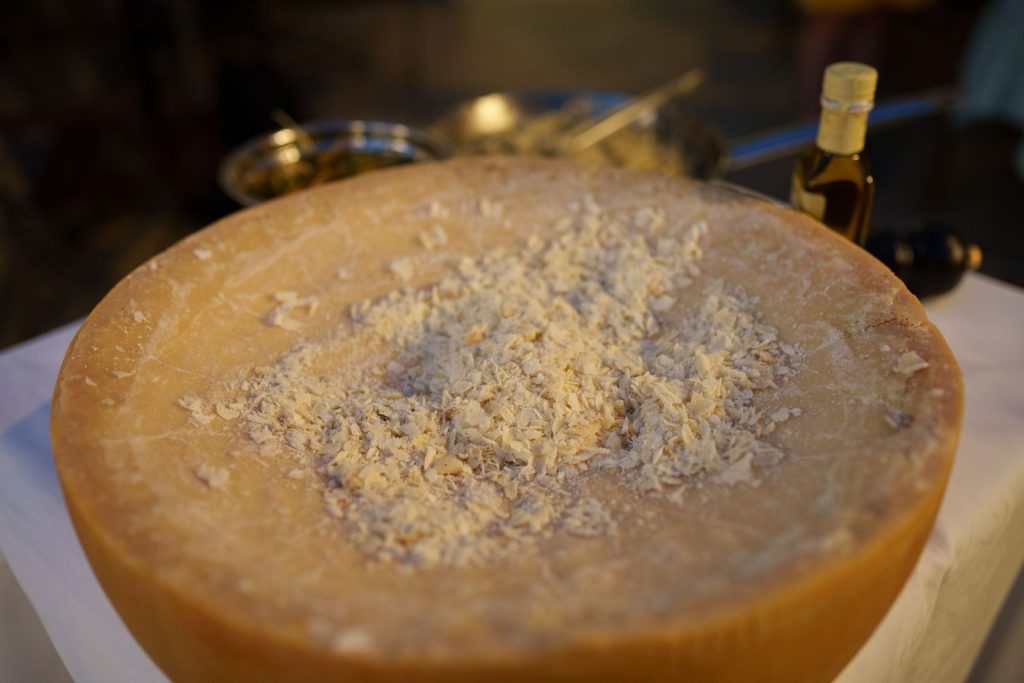
What exactly is Parmesan cheese?
Parmesan cheese is a general term for a hard, long-aged Italian cow’s milk cheese. The real, protected name is Parmigiano Reggiano, a DOP cheese (Denominazione di Origine Protetta) that can only carry that name if it’s made according to strict rules in the Italian provinces of Parma, Reggio Emilia, Modena, part of Bologna, or part of Mantua.
“Parmesan” or “Parmesan cheese” is essentially the everyday English term. In Italy and in official usage, you refer to Parmigiano Reggiano. All other cheeses sold as “Parmesan” are technically something different, usually Grana Padano or a generic hard-aged cheese. Always check the label.
How is Parmesan cheese made?
Parmigiano Reggiano is made from raw cow’s milk (partly skimmed) using a centuries-old process. A few key characteristics:
- Raw milk: never pasteurized, only heated during the coagulation process.
- No additives: just milk, salt, and natural rennet (calf’s stomach lining).
- Enormous wheels: each wheel weighs around 38 to 40 kilos and is brined and turned for months.
- Long aging: a minimum of 12 months, often 24 or 36. The longer it ages, the more those characteristic white crystals (tyrosine amino acids) develop, both visually and in flavor.
- Quality control: after 12 months, every wheel is tested with a small hammer. Only wheels that pass the sound test receive the official DOP mark.
See also why connoisseurs prefer raw-milk cheese for the nuances.
A Swiss aged hard-cheese counterpart: Emmentaler with its famous holes.
Parmigiano Reggiano, Grana Padano, or Parmesan: what’s the difference?
One of the most common questions in the cheese shop. The three are related, but they’re not the same:
- Parmigiano Reggiano: DOP cheese, fixed production area, aged at least 12 months, only raw seasonal milk. Intense, grainy, with crystals.
- Grana Padano: also DOP, also hard and aged, but from a larger area (the Po Valley) with more flexible rules around animal feed. Can be sold after just 9 months. Slightly milder and creamier in flavor.
- Parmesan cheese: in everyday English, often a catch-all term for hard-aged Italian-style cow’s milk cheese. Not protected. It could be Parmigiano Reggiano, it could be Grana Padano, or it could be a cheaper imitation. Always check the label.
Want the real thing? Go for Parmigiano Reggiano. Prefer a milder option or a more budget-friendly alternative? Grana Padano is often a great choice.
Is Parmesan cheese healthy?
Parmesan is rich in protein (around 33%) and calcium, and contains the fats and minerals you’d expect from an aged cow’s milk cheese. Three things that make it nutritionally notable:
- Virtually lactose-free: the long aging process breaks down almost all the lactose, making it suitable for people who are lactose-sensitive.
- High in protein: per 100 grams, you get around 33 grams of protein, comparable to lean fish.
- High in salt: typically around 1.5 grams per 100 grams. Enjoy in moderation.
As a cheese, it’s rich in fat and salt. As an ingredient, it’s highly concentrated. A few grams over your pasta goes a long way.
Can you eat Parmesan cheese during pregnancy?
A common question, with a reassuring answer: Parmigiano Reggiano is safe to eat during pregnancy, even though it’s made from raw milk. The combination of high salt content, long aging (12 months or more), and low moisture makes it impossible for the Listeria bacteria to survive. This is also the official position of the Italian Consorzio, confirmed by Dutch nutrition experts.
That advice does not apply to other raw-milk Italian cheeses, such as soft ripened mold-ripened cheeses. If in doubt, always check the label and ask your cheesemonger.
For the full picture, check our cheese and pregnancy guide.
What does Parmesan cheese pair well with?
Parmesan is one of the most versatile cheeses out there. A few classic uses:
- Grated over pasta: from a simple aglio e olio to a rich carbonara, a little freshly grated Parmesan elevates the dish.
- Shaved over carpaccio: with a few drops of balsamic and good olive oil.
- In chunks at aperitivo: with a glass of Prosecco or a dry white wine.
- In risotto: stir it in at the end for a creamy finish.
- On a cheese board: pair with peaches, fig jam, or honey.
For the best results, grate or shave the Parmesan just before serving. Pre-grated Parmesan from a bag loses its aroma quickly.
Tip: see our cheese board guide for tips on balancing flavours and textures.
Our Parmesan cheese
At Cheese In A Box, we cut Italian cheese fresh to order, rather than from pre-packaged bags. Check out our Parmigiano Reggiano and taste the difference. We also carry other Italian cheeses, including Pecorino, Gorgonzola, and the milder Gorgonzola Dolce.
Want to discover a new cheese every month? Our cheese subscription delivers a surprising selection of artisanal cheeses, Italian and international, straight to your door.
{ “@context”: “https://schema.org”, “@type”: “FAQPage”, “mainEntity”: [ { “@type”: “Question”, “name”: “What is the difference between Parmigiano Reggiano and Grana Padano?”, “acceptedAnswer”: { “@type”: “Answer”, “text”: “Both are DOP-protected Italian hard cow’s milk cheeses. Parmigiano Reggiano comes from a fixed production area (Parma, Reggio Emilia, Modena, and parts of Bologna and Mantua), is aged for a minimum of 12 months, and has strict rules around animal feed. Grana Padano comes from a larger area (the Po Valley), can be sold after just 9 months, and is slightly milder and creamier in flavor.” } }, { “@type”: “Question”, “name”: “Can you eat Parmesan cheese during pregnancy?”, “acceptedAnswer”: { “@type”: “Answer”, “text”: “Yes, Parmigiano Reggiano is safe to eat during pregnancy, even though it’s made from raw milk. The high salt content, long aging (at least 12 months), and low moisture make it impossible for the Listeria bacteria to survive. This does not apply to other raw-milk Italian cheeses such as soft mold-ripened cheeses. If in doubt, check the label.” } }, { “@type”: “Question”, “name”: “Does Parmesan cheese contain lactose?”, “acceptedAnswer”: { “@type”: “Answer”, “text”: “Barely. The long aging process of at least 12 months breaks down almost all the lactose. This makes Parmigiano Reggiano suitable for most people who are lactose-sensitive, though individual tolerance varies.” } }, { “@type”: “Question”, “name”: “How long does Parmesan cheese keep?”, “acceptedAnswer”: { “@type”: “Answer”, “text”: “A vacuum-sealed piece of Parmigiano Reggiano will keep in the refrigerator for several months. Once opened, wrap it in wax paper or foil and store it in the fridge. It will stay at its best for 3 to 4 weeks. Trim any dry edges before using.” } }, { “@type”: “Question”, “name”: “What does Parmesan cheese pair well with?”, “acceptedAnswer”: { “@type”: “Answer”, “text”: “Parmesan is incredibly versatile: grated over pasta (carbonara, aglio e olio), shaved over carpaccio with balsamic, served in chunks at aperitivo with Prosecco, stirred into risotto for a creamy finish, or placed on a cheese board with peaches and honey. Grate or shave just before serving for the best aroma.” } } ] }Discover our Dutch main category in our farmhouse cheese article.