

Grana Padano is one of Italy’s best-selling cheeses, and in the Netherlands it’s often sold under the catch-all label “Parmesan.” But is Grana Padano the same as Parmigiano Reggiano? Not quite. We explain exactly what Grana Padano is, how it differs from Parmesan, and what it’s best used for.
What exactly is Grana Padano?
Grana Padano is an Italian hard, long-aged cow’s milk cheese with DOP status (Denominazione di Origine Protetta). The name comes from the Italian word grana, meaning “grain,” a reference to the grainy, granular texture that’s typical of this cheese family. Padano refers to the Po Valley (Pianura Padana), where the cheese originates.
Grana Padano is produced across a large part of northern Italy, mainly in Lombardy, Piedmont, Veneto, Emilia-Romagna, and the province of Trento. That production zone is far broader than that of its famous cousin Parmigiano Reggiano, and that’s one of the key differences between the two.
Is Grana Padano the same as Parmesan?
It’s a question you hear a lot at the supermarket or the cheese counter. The answer: no, Grana Padano is not the same as Parmigiano Reggiano, though they are similar in style and use. In the Netherlands, “Parmesan” is often used as a blanket term for both.
The main differences at a glance:
- Production area: Parmigiano Reggiano comes from a small, fixed zone (Parma, Reggio Emilia, Modena, and parts of Bologna and Mantua). Grana Padano comes from a much larger area across the Po Valley.
- Cow feed: Parmigiano Reggiano rules prohibit silage; only fresh grass and hay are allowed. Grana Padano permits silage, which lowers production costs.
- Preservative: Grana Padano may contain lysozyme (E-1105, derived from eggs) as a natural preservative. Parmigiano Reggiano does not.
- Aging: Grana Padano can be sold after just 9 months. Parmigiano Reggiano requires a minimum of 12 months, and is often aged much longer (24 or 36 months).
- Flavor: Grana Padano is generally milder, creamier, and softer than Parmigiano Reggiano, which is more intense with pronounced nutty notes and crystals at longer aging.
- Price: Grana Padano is usually less expensive.
Both are fantastic cheeses, just for different occasions. Read more about the better-known sibling on our page about what is Parmesan.
How is Grana Padano made?
The process closely resembles that of Parmigiano Reggiano, with a few distinctions of its own:
- Partially skimmed cow’s milk: from two milkings (evening milk plus morning milk).
- Coagulation: using calf rennet, in copper vats.
- Large wheels: a Grana Padano wheel weighs between 24 and 40 kilos.
- Brine bath: the wheels are submerged in brine, sometimes for 14 to 30 days.
- Aging: a minimum of 9 months, often longer. Extended-aging varieties can reach 20+ months.
- DOP certification: only wheels that pass quality inspection receive the official fire brand.
Comparable aged hard cheese from Switzerland: read our article on Emmentaler.
The three aging stages of Grana Padano
Grana Padano DOP has three official classifications based on aging time:
- Grana Padano (9–16 months): young, mild, and creamy. Great for grating, in salads, or eating fresh.
- Grana Padano Oltre 16 Mesi (16+ months): full, bold, and more characterful. The sweet notes become more pronounced.
- Grana Padano Riserva (20+ months): intense and complex, sometimes with crystals. A true enthusiast’s cheese, comparable in intensity to a good Parmigiano Reggiano.
Is Grana Padano healthy?
Like other long-aged cow’s milk cheeses, Grana Padano is nutritionally rich. A few highlights:
- High in protein: around 33 grams per 100 grams.
- Calcium source: even a small amount covers a meaningful portion of your daily calcium needs.
- Lactose: virtually absent due to the long aging process, making it suitable for most people with mild lactose sensitivity.
- Fat and salt: relatively high. Enjoy in moderation.
Can you eat Grana Padano during pregnancy?
Yes, Grana Padano is safe to eat during pregnancy. As with Parmigiano Reggiano, the combination of high salt concentration, long aging (a minimum of 9 months), and low moisture content makes it impossible for Listeria bacteria to survive. This applies even to versions made from raw milk.
Do avoid soft, briefly aged Italian cheeses and blue cheeses during pregnancy. When in doubt, check the label or ask your cheese shop.
What does Grana Padano go well with?
Grana Padano is wonderfully versatile and works in far more than just pasta dishes:
- Grated over pasta: the classic. Especially good with milder pasta sauces where Parmigiano might overpower.
- In risotto: stirred in at the end for a creamy finish.
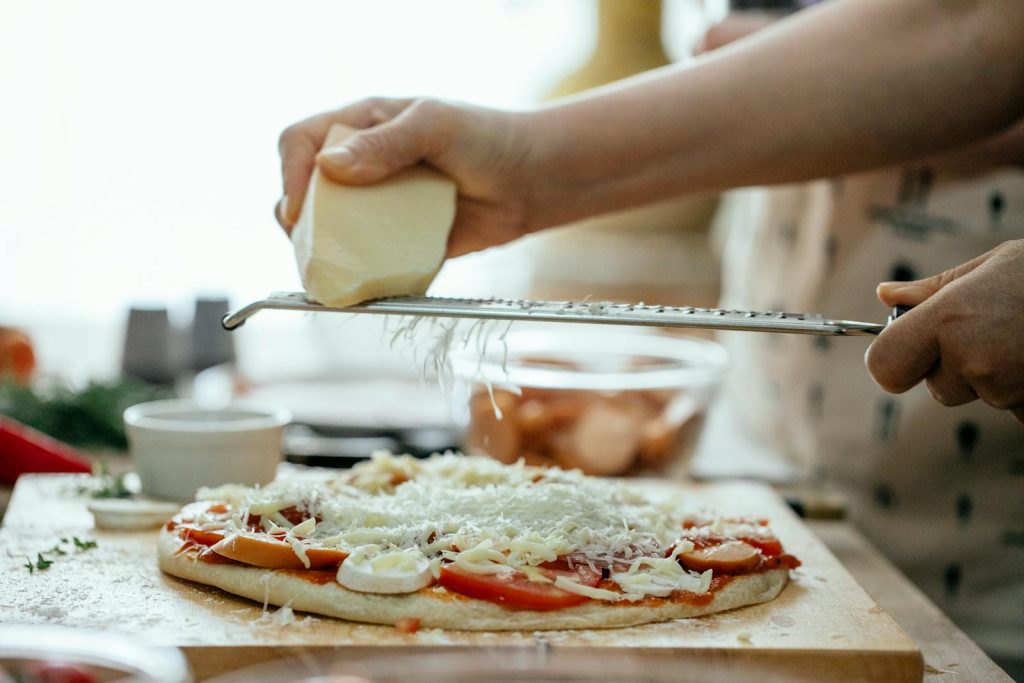
- On pizza: freshly grated after baking, not underneath.
- In pieces as an aperitivo: with a glass of Prosecco, Lambrusco, or a nice Pinot Grigio.
- On a cheese board: pair with pears, grapes, or fig jam.
- In soups: drop a Grana Padano rind into a minestrone or bean soup, a classic Italian kitchen trick.
Tip: always grate Grana Padano just before serving. Pre-grated cheese from a bag quickly loses its aroma and can turn slightly stale.
Our Italian cheeses
We don’t currently carry Grana Padano in our regular range at Cheese In A Box, but most of the same dishes and occasions work just as well, and often better, with Parmigiano Reggiano. Highly recommended for true enthusiasts.
Want to explore a broader Italian selection? Try our Pecorino (sheep cheese, perfect for pasta classics like cacio e pepe and carbonara), or Italian blue cheese icons Gorgonzola and Gorgonzola Dolce.
Want to discover a new cheese every month? With our cheese subscription, every delivery brings a surprising selection of artisanal cheeses, Italian and international, straight to your door.
{ “@context”: “https://schema.org”, “@type”: “FAQPage”, “mainEntity”: [ { “@type”: “Question”, “name”: “Is Grana Padano the same as Parmesan?”, “acceptedAnswer”: { “@type”: “Answer”, “text”: “No. In the Netherlands, ‘Parmesan’ is often used as a catch-all term, but the two real DOP cheeses are Grana Padano and Parmigiano Reggiano, related but distinct. Grana Padano comes from a larger area (the Po Valley), can be sold after just 9 months, and has a milder, creamier flavor. Parmigiano Reggiano comes from a small fixed zone and is aged for at least 12 months, resulting in a more intense flavor with nutty notes and crystals at longer aging.” } }, { “@type”: “Question”, “name”: “What is the difference between Grana Padano and Parmigiano Reggiano?”, “acceptedAnswer”: { “@type”: “Answer”, “text”: “Five key differences: 1) Grana Padano comes from the Po Valley (a larger area); Parmigiano from a small fixed zone around Parma. 2) Silage is permitted for Grana Padano cows; Parmigiano allows only fresh grass and hay. 3) Grana Padano may contain lysozyme (E-1105) as a preservative. 4) Grana Padano is aged a minimum of 9 months; Parmigiano a minimum of 12. 5) Grana Padano is milder and less expensive; Parmigiano is more intense and pricier.” } }, { “@type”: “Question”, “name”: “Can you eat Grana Padano during pregnancy?”, “acceptedAnswer”: { “@type”: “Answer”, “text”: “Yes, Grana Padano is safe to eat during pregnancy. The combination of high salt content, long aging (a minimum of 9 months), and low moisture content prevents Listeria bacteria from surviving, even in versions made from raw milk. Do avoid soft, briefly aged Italian cheeses and blue cheeses during pregnancy.” } }, { “@type”: “Question”, “name”: “Does Grana Padano contain lactose?”, “acceptedAnswer”: { “@type”: “Answer”, “text”: “Barely. The minimum 9-month aging process breaks down almost all of the lactose. As a result, Grana Padano is suitable for most people with lactose sensitivity, though individual reactions can vary.” } }, { “@type”: “Question”, “name”: “What does Grana Padano go well with?”, “acceptedAnswer”: { “@type”: “Answer”, “text”: “Grana Padano is very versatile: freshly grated over pasta, stirred into risotto for a creamy finish, grated over pizza after baking, served in pieces at aperitivo time with Prosecco or Lambrusco, on a cheese board with pears or fig jam, and simmered as a rind in soups, a classic Italian kitchen tip. Always grate just before serving for the best aroma.” } } ] }Discover our Dutch main category in our farmhouse cheese article.