

Pecorino is a staple for pasta lovers and a world unto itself for cheese lovers. It’s a hard, aged Italian cheese made not from cow’s milk but from sheep’s milk. Sharper and saltier than Parmesan, it comes with its own rich tradition. Here’s what pecorino is, what varieties exist, and what to use it for.
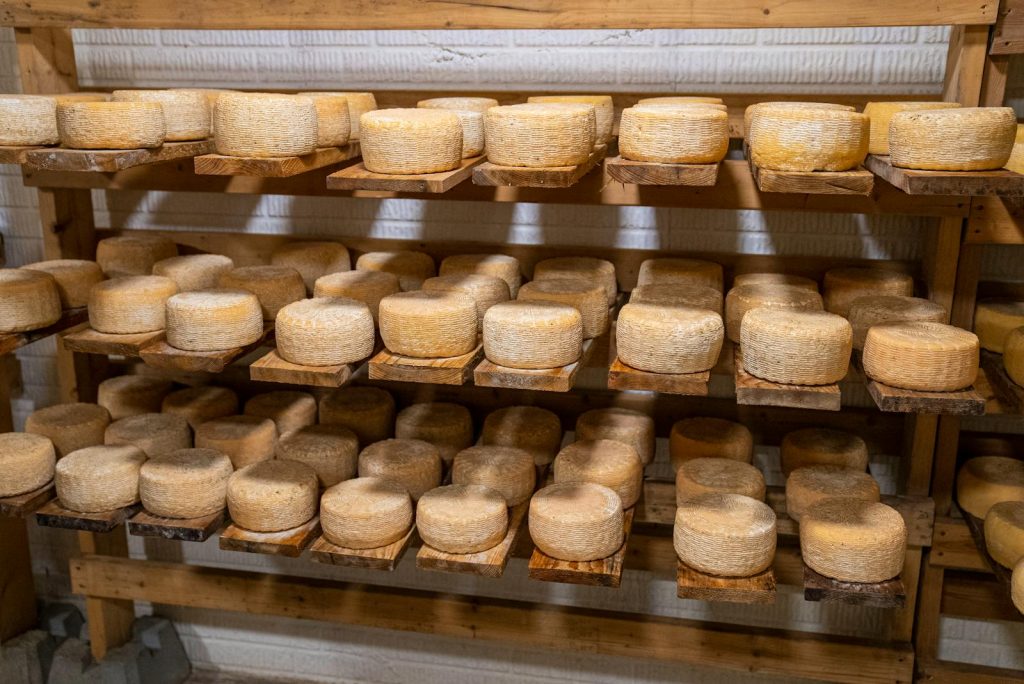
What exactly is pecorino?
Pecorino is the Italian umbrella term for sheep cheese. The word comes from pecora, the Italian word for sheep. Any hard or semi-hard Italian cheese made exclusively from sheep’s milk can be called pecorino, though the best-known varieties carry their own DOP protection (Denominazione di Origine Protetta).
Pecorino has been made since Roman times. Legions were even given it as part of their rations. You can still taste that heritage in the intense, savory flavor and firm character of a well-aged pecorino.
The main types of pecorino
Italy has four major DOP pecorinos, each from a different region:
- Pecorino Romano DOP: the best-known. It comes from Lazio, Sardinia and parts of Tuscany. Long-aged (minimum 5 months), spicy and salty, it’s essential in cacio e pepe and carbonara.
- Pecorino Toscano DOP: softer and creamier than Romano. Young (from 20 days) it’s mild and buttery; aged (after 4 months) it becomes full-flavored and complex.
- Pecorino Sardo DOP: from Sardinia, in two varieties: Dolce (young and mild) and Maturo (aged and intense). Often recognized by its characteristic straw-yellow rind.
- Pecorino Siciliano DOP: one of Italy’s oldest DOP cheeses. Firm, savory, sometimes refined with pepper or saffron.
Beyond these, there are countless regional varieties and variations: pecorino with pepper (pepato), with truffle (al tartufo), with chili, aged in walnut leaves, or young and soft (dolce).
How pecorino is made
Sheep’s milk is richer and more concentrated than cow’s milk, higher in fat, protein and solids. That’s what gives pecorino its character, though it also makes production a little more involved. The process in brief:
- Milk: sheep’s milk only, often raw (especially for DOP varieties).
- Coagulation: traditionally with lamb rennet, sometimes with vegetable rennet.
- Pressing: the curd is pressed into round molds and the wheels are salted. Pecorino Romano is mainly brined in salt baths; others are dry-salted.
- Aging: from a few weeks (Dolce) to more than a year (Stagionato). The longer it ages, the sharper and firmer it becomes.
Want more on this? Read our article on raw-milk cheese.
Pecorino vs. Parmesan: what’s the difference?
A common question, especially when following pasta recipes. The key difference comes down to the milk:
- Pecorino: made from sheep’s milk. Sharper, saltier, with a pronounced savory edge and a faint sheep’s-milk aroma.
- Parmesan (Parmigiano Reggiano): made from cow’s milk. Milder, more complex, with nutty notes and crystals after long aging.
For pasta dishes like cacio e pepe and authentic carbonara, pecorino is the traditional choice, not Parmesan. For milder pasta sauces and risottos, Parmesan is often a better fit. Many Italian cooks use both: pecorino for character, Parmesan for balance.
Want to taste and compare them side by side? Check out our Pecorino and Parmigiano Reggiano.
Is pecorino good for you?
Sheep’s milk has a few interesting nutritional properties compared to cow’s milk:
- Higher in protein: pecorino typically contains 25 to 35 grams of protein per 100 grams.
- Smaller fat globules: many people find sheep’s milk easier to digest than cow’s milk.
- Rich in calcium and B12: sheep’s milk is more concentrated than cow’s milk, making pecorino a good source of both nutrients.
- Very low in lactose: in aged pecorino (from a few months onward), nearly all the lactose has broken down.
On the downside, pecorino is relatively salty and high in fat. A little goes a long way on pasta, so more isn’t always better.
Can you eat pecorino during pregnancy?
For hard, aged pecorinos like Pecorino Romano or a long-aged Toscano and Sardo Maturo, the answer is yes: these are safe during pregnancy, even when made from raw milk. The combination of high salt content, long aging and low moisture content prevents Listeria from surviving, similar to Parmigiano Reggiano.
That advice does not apply to soft, young pecorinos (such as Pecorino Sardo Dolce or a fresh pecorino fresco) made from raw milk: avoid these during pregnancy. If in doubt, choose a pasteurized variety or ask your cheese shop.
What does pecorino go well with?
Pecorino is wonderfully versatile. The classics:
- Cacio e pepe: pasta with nothing but pecorino, pepper and pasta water. No Parmesan, no cream, pure pecorino.
- Authentic carbonara: pecorino (optionally half-and-half with Parmesan) instead of Parmesan alone.
- On the cheese board: serve with honey, fig jam or pears. The sweet notes cut through the salty bite of the cheese.
- With red wine: a bold Italian red (Chianti, Brunello, Aglianico) is a natural match.
- Freshly grated over vegetables: try pecorino over a broad bean salad or roasted potatoes.
- With pears and walnuts: an Italian saying goes “al contadino non far sapere quanto è buono il formaggio con le pere,” don’t let the farmer know how good cheese is with pears.
Need help building one? Read our guide on the perfect cheese board.
Our pecorino
At Cheese In A Box we carry artisanal Pecorino, cut fresh to order, vacuum-sealed and delivered chilled. For other Italian cheeses, take a look at our Parmigiano Reggiano, the spicy Gorgonzola or the milder Gorgonzola Dolce.
Want to discover a new Italian cheese every month? Our cheese subscription brings a surprising selection of artisanal cheeses, Italian and international, straight to your door with every delivery.
{ “@context”: “https://schema.org”, “@type”: “FAQPage”, “mainEntity”: [ { “@type”: “Question”, “name”: “What is the difference between Pecorino Romano and Pecorino Toscano?”, “acceptedAnswer”: { “@type”: “Answer”, “text”: “Pecorino Romano comes from Lazio, Sardinia and parts of Tuscany, ages for a minimum of 5 months and is spicy, hard and salty, essential in cacio e pepe and carbonara. Pecorino Toscano comes from Tuscany and is softer and creamier: young (from 20 days) it’s mild and buttery, aged (after 4 months) it’s full-flavored and complex.” } }, { “@type”: “Question”, “name”: “Is pecorino made from goat’s milk or sheep’s milk?”, “acceptedAnswer”: { “@type”: “Answer”, “text”: “Pecorino is always made from sheep’s milk. The word comes from the Italian ‘pecora’ (sheep). Sheep’s milk gives pecorino its characteristic sharp, salty flavor and firmer texture, quite different from goat cheese, which is made from goat’s milk.” } }, { “@type”: “Question”, “name”: “Can you eat pecorino during pregnancy?”, “acceptedAnswer”: { “@type”: “Answer”, “text”: “Hard aged pecorinos such as Pecorino Romano or long-aged Toscano/Sardo are safe during pregnancy, even when made from raw milk: the combination of high salt content, long aging and low moisture makes Listeria survival impossible. Avoid young soft pecorinos (such as Pecorino Sardo Dolce or fresh pecorino fresco) made from raw milk.” } }, { “@type”: “Question”, “name”: “Does pecorino contain lactose?”, “acceptedAnswer”: { “@type”: “Answer”, “text”: “Aged pecorino (from a few months onward) contains very little lactose, as it breaks down almost completely during aging. This makes aged pecorino generally well-tolerated by people with mild lactose sensitivity.” } }, { “@type”: “Question”, “name”: “What does pecorino go well with?”, “acceptedAnswer”: { “@type”: “Answer”, “text”: “Pecorino is a classic in cacio e pepe and authentic carbonara (without Parmesan). It’s also delicious on a cheese board with honey, fig jam or pears; alongside bold Italian red wines (Chianti, Brunello); freshly grated over salads or roasted vegetables; and in small pieces as part of an aperitivo spread.” } } ] }Or discover our Dutch pride: read about what farmhouse cheese is — our strongest category.