

Gorgonzola: for some people it’s the blue cheese, for others an acquired taste. Either way, it’s one of the oldest and most famous Italian cheeses, made from cow’s milk and recognized by the blue-green veins running through its white body. But what exactly is Gorgonzola, what’s the difference between Dolce and Piccante, and is it safe to eat during pregnancy? We’ll break it all down.
What exactly is Gorgonzola?
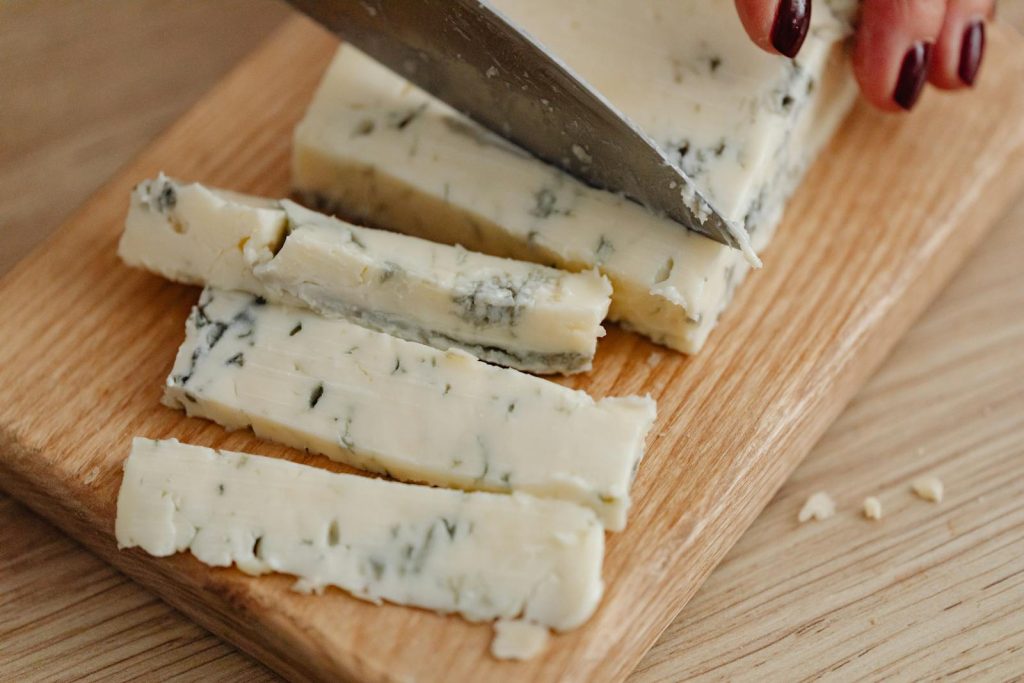
Gorgonzola is an Italian blue cheese with DOP status (Denominazione di Origine Protetta). It can only be produced in a designated area: the Italian regions of Piedmont and Lombardy. The name comes from the small town of Gorgonzola, near Milan, where the cheese is said to have been made since the 9th century.
It is made exclusively from cow’s milk and gets its characteristic blue-green veins from the addition of the mold Penicillium roqueforti, the same family found in Roquefort and Stilton, but with its own distinctly Italian character.
Gorgonzola Dolce or Piccante: what’s the difference?
There are two official DOP varieties:
- Gorgonzola Dolce: young (aged 50–150 days), soft and creamy. Mild in flavor, almost buttery, with a light sweet-to-briny blue cheese note. Spreadable in texture.
- Gorgonzola Piccante (also known as Naturale or Stagionato): aged longer (80–270 days), firmer, drier and much more intense. The blue mold comes through more boldly and the flavor is sharp, punchy and savory.
New to blue cheese? Start with Gorgonzola Dolce. Its soft, spreadable texture and milder flavor make it a great entry point. Our Gorgonzola Dolce is perfect for that. If you love a bold, spicy cheese, go for our Gorgonzola.
How Gorgonzola is made
The production process differs from other cheeses in a few important ways:
- Cow’s milk: pasteurized (required by law for Gorgonzola DOP).
- Adding the mold: Penicillium roqueforti spores are introduced to the milk during curdling.
- Needling: after a few weeks of aging, the wheels are pierced with long metal needles. This lets oxygen reach the mold so it can grow and form the signature blue-green veins.
- Aging: in humid cellars at precisely the right temperature. The longer it ages, the stronger and drier it becomes.
- DOP inspection: every wheel receives a marked foil wrap as proof of origin.
Gorgonzola, Roquefort, Stilton: what’s the difference?
Three of the world’s most famous blue cheeses, all iconic, all distinct:
- Gorgonzola (Italy, cow’s milk): creamy and relatively mild in Dolce, intense in Piccante. Rich and smooth.
- Roquefort (France, sheep’s milk): spicy, salty, with a pronounced sheep’s milk character. Aged in the natural caves of Roquefort-sur-Soulzon.
- Stilton (England, cow’s milk): crumbly, drier, with its own English, nutty style. A classic pairing with port.
All three belong on a great cheese board, each playing its own role.
A lesser-known but fascinating blue: read our article on Shropshire Blue, the British blue-veined cheese with an orange hue.
Is Gorgonzola good for you?
Like other aged cow’s milk cheeses, Gorgonzola is rich in protein, calcium and vitamin B12. A few specific points worth knowing:
- Penicillium mold: the blue mold naturally produces compounds that may help fight inflammation, though you won’t get much of that benefit from a small piece of cheese.
- Lactose: in longer-aged Piccante, nearly all the lactose has broken down. Dolce still contains a small amount.
- Salt and fat: Gorgonzola is fairly salty and rich. Enjoy it in moderation.
- Protein: around 19–22 grams per 100 grams, making it a great savory snack for anyone looking to boost their protein intake.
Gorgonzola during pregnancy: what’s the advice?
The advice is clear: avoid Gorgonzola during pregnancy. Blue cheeses fall into the category of soft mold-ripened cheeses, in which Listeria monocytogenes can survive, even when the milk has been pasteurized. The moist, moldy structure and lower salt concentration allow this bacterium to multiply, which poses a serious risk to an unborn child.
This advice is in line with the guidelines of the Voedingscentrum and RIVM. For a safe Italian hard cheese during pregnancy, choose Parmigiano Reggiano (aged more than 12 months), which is considered safe. You can also read our article on what Parmesan cheese is for more information about cheese during pregnancy.
See also our article on cheese during pregnancy — we explain per cheese type what is safe and what to avoid.
What goes well with Gorgonzola?
Gorgonzola is one of the most versatile cheeses both on the board and in the kitchen. Some classic uses:
- On a cheese board: serve with pears, figs or honey, as the sweet notes soften the intensity.
- In risotto: Gorgonzola melts beautifully, adding creamy body and bold flavor.
- In a pasta sauce: gnocchi with Gorgonzola is an Italian classic, especially with walnuts.
- On pizza: one of the four cheeses in the classic quattro formaggi.
- With a glass of wine: a sweet dessert wine (Sauternes, Moscato), a robust red (Amarone, Barolo) or an Italian white all work beautifully.
- In a salad: pair with pear, walnuts and arugula.
Tip: take Gorgonzola out of the fridge half an hour before serving. At room temperature, the aromas really come into their own.
More ideas in our article on putting together a cheese board.
Dive deeper in our article on cheese and wine pairings.
Our Gorgonzola
At Cheese In A Box we stock both classic varieties: the milder Gorgonzola Dolce for newcomers or anyone after something creamy, and the more full-flavored Gorgonzola for lovers of character. Cut fresh to order, vacuum-sealed and delivered chilled.
Pair them with other Italian cheeses on a beautiful board: our Parmigiano Reggiano and Pecorino together with Gorgonzola make a wonderful Italian trio. Or choose our cheese subscription and discover a new combination every month.
{ “@context”: “https://schema.org”, “@type”: “FAQPage”, “mainEntity”: [ { “@type”: “Question”, “name”: “What is the difference between Gorgonzola Dolce and Piccante?”, “acceptedAnswer”: { “@type”: “Answer”, “text”: “Gorgonzola Dolce is young (aged 50–150 days), soft, creamy and spreadable, with a mild sweet-to-briny blue cheese note. Gorgonzola Piccante (Naturale/Stagionato) is aged 80–270 days, firmer, drier and much more intense. New to blue cheese? Start with Dolce.” } }, { “@type”: “Question”, “name”: “Can you eat Gorgonzola during pregnancy?”, “acceptedAnswer”: { “@type”: “Answer”, “text”: “No, avoid Gorgonzola during pregnancy. It is a soft mold-ripened cheese in which Listeria bacteria can survive, even when the milk has been pasteurized. This advice is in line with the guidelines of the Voedingscentrum and RIVM. Safe alternatives include hard aged cheeses such as Parmigiano Reggiano.” } }, { “@type”: “Question”, “name”: “What is the difference between Gorgonzola and Roquefort?”, “acceptedAnswer”: { “@type”: “Answer”, “text”: “Gorgonzola is Italian and made from cow’s milk, creamy (Dolce) or bold (Piccante). Roquefort is French and made from sheep’s milk, spicy and salty with a pronounced sheep’s milk character, aged in the natural caves of Roquefort-sur-Soulzon. Both use Penicillium roqueforti, but the flavors and textures are clearly different.” } }, { “@type”: “Question”, “name”: “Does Gorgonzola contain lactose?”, “acceptedAnswer”: { “@type”: “Answer”, “text”: “Gorgonzola Piccante (longer aged) contains virtually no lactose, as it has almost completely broken down during aging. Gorgonzola Dolce (younger) still contains a small amount. For mild lactose sensitivity, Piccante is generally better tolerated than Dolce.” } }, { “@type”: “Question”, “name”: “What goes well with Gorgonzola?”, “acceptedAnswer”: { “@type”: “Answer”, “text”: “Gorgonzola is very versatile: on a cheese board with pears, figs or honey; in risotto for a creamy finish; in pasta sauces (classic gnocchi with Gorgonzola and walnuts); on pizza quattro formaggi; in salads with pear and walnuts; and with wine, including sweet dessert wines (Sauternes, Moscato) or bold Italian reds (Amarone, Barolo).” } } ] }Strong in our shop: see also our article on Dutch farmhouse cheese.