

Feta: for many people, it’s synonymous with a Greek summer. A white, crumbly cheese in olive oil, on a salad, in a spanakopita or eaten straight from the brine. But what is feta, really? Can any white sheep cheese carry that name? And is it safe to eat during pregnancy? We explain exactly what feta is, how it’s made and how to serve it at its best.
What is feta, exactly?
Feta is a Greek white, aged cheese that is stored in brine. Since 2002 it has held European PDO status (Protected Designation of Origin), which means the name “feta” may only be used for cheese made in Greece, and specifically in a number of designated regions (virtually all of Greece except for a few islands).
Authentic feta is made from sheep’s milk, or a blend of sheep’s milk with up to 30% goat’s milk. Cow’s milk is not permitted in real feta. Much of the “feta cheese” on Dutch supermarket shelves is technically not feta at all, but a white cow’s milk cheese in brine. Under EU rules it can no longer be called “feta,” but it can be labeled something like “white cheese in brine” or “Salakis-style.”
How is feta made?
The process is centuries old and relatively straightforward:
- Milk: sheep’s milk (sometimes with goat’s milk added), traditionally raw but often pasteurized for export.
- Curdling: using animal or vegetable rennet.
- Cutting and draining: the curds are cut into blocks and left to drain for several hours to a few days.
- Brining: the blocks are placed in a strong salt bath (8–12% salt), where they ripen and are preserved.
- Aging: at least two months in brine, often longer. The longer it ages, the sharper and more crumbly it becomes.
The characteristic white color, crumbly texture and salty flavor are all the result of that extended brine-aging process.
Feta or “white cheese in brine”: what’s the difference?
In Dutch supermarkets you’ll often find:
- Real Greek feta (PDO): sheep’s milk (or a blend with goat’s milk), made in Greece, PDO label on the packaging. Full-flavored, salty, sharp.
- White cheese in brine (sometimes previously called “Bulgarian feta” or sold under a brand name like Salakis): usually made from cow’s milk, produced outside Greece. Since 2022, it can no longer be called “feta” in the EU. Milder and more affordable.
Both are delicious, but they taste noticeably different. For an authentic Greek salad or a perfectly executed baked feta with honey, go for real PDO feta. For everyday use in salads, a good cow’s milk version works just fine, just expect a milder experience.
Is feta healthy?
Feta is nutritionally interesting, especially compared to other cheeses:
- Protein: 14–17 grams per 100 grams. A solid source.
- Fat: 21–24 grams per 100 grams, less than many hard cheeses, but still significant.
- Calcium: sheep’s milk feta provides more calcium than cow’s milk versions.
- Lactose: feta still contains some lactose (unlike long-aged cheeses), though less than fresh cheeses thanks to the brine-aging process.
- Salt: this is the main thing to watch. Feta is packed with salt (1,500–2,000 mg of sodium per 100 grams). Enjoy in moderation, especially if you have high blood pressure.
The combination of protein, moderate fat and relatively few calories makes feta a great option for many people, as long as you keep an eye on the salt content. Tip: rinsing feta under cold water before use significantly reduces the sodium level.
Feta during pregnancy: is it safe?
It all comes down to pasteurization:
- Pasteurized feta (most supermarket versions, including PDO): safe during pregnancy. Pasteurization kills Listeria.
- Raw-milk feta (often artisanal Greek versions, found at specialty stores): avoid. The high moisture content and short aging time can allow Listeria to multiply.
Always check the label. Does it say “pasteurized” or “pastorisé”? Then you’re good. If in doubt, ask your cheese shop, or choose a safer alternative like our aged Italian Parmigiano Reggiano or Pecorino (both safe during pregnancy due to their long aging).
For the full picture, check our cheese and pregnancy guide.
What does feta pair well with?
Feta is a true all-rounder in Mediterranean cooking:
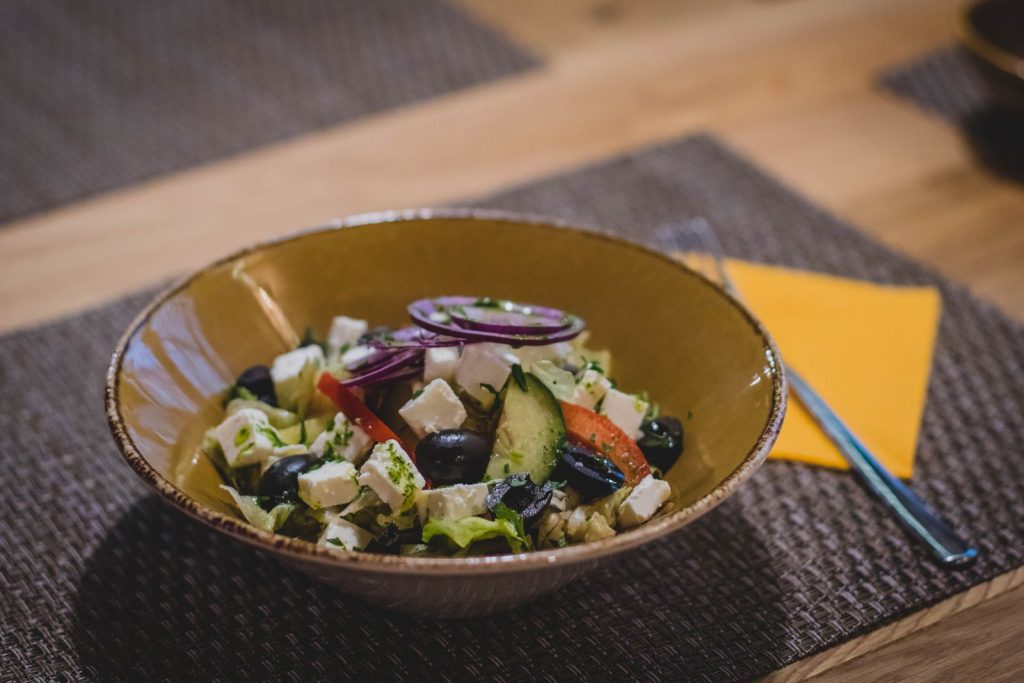
- Classic Greek salad: tomato, cucumber, red onion, Kalamata olives, bell pepper, a block of feta on top and good olive oil drizzled over. Done.
- Watermelon and feta salad: a summer classic, sweet watermelon, salty feta, fresh mint. Surprisingly good.
- Spanakopita: spinach and feta pie in phyllo dough.
- Baked feta with honey and sesame: an incredibly simple starter, feta wrapped in phyllo or placed straight in an oven dish, baked, then finished with honey and toasted sesame seeds.
- On roasted squash: roasted squash wedges from the oven, crumbled feta, walnuts, pomegranate.
- In pasta: the TikTok-viral baked feta pasta, a block of feta in the oven with cherry tomatoes, then tossed with pasta.
- With grilled vegetables or meat: feta crumbled over zucchini, eggplant or lamb chops.
Tip: don’t store feta in the fridge in just its original packaging. Keep it in brine, either the liquid from the pack or a homemade brine of water with 5% salt. That way it stays fresh for weeks.
Our cheeses
Feta isn’t part of the regular Cheese In A Box lineup, our focus is on Dutch farmhouse cheeses, French classics and Italian icons. But if you’re looking to bring a Mediterranean feel to your cheese board or salad, we do have some interesting alternatives:
- Pecorino, Italian sheep cheese with a savory bite, also great shaved over a salad.
- Parmigiano Reggiano, shaved over a Mediterranean vegetable salad.
- Gorgonzola Dolce, for a soft blue cheese addition to a summer board.
Want to discover a new artisanal cheese every month? With our cheese subscription you get a surprising selection of cheeses with every delivery, Dutch, French, Italian and more, delivered straight to your door.
{ “@context”: “https://schema.org”, “@type”: “FAQPage”, “mainEntity”: [ { “@type”: “Question”, “name”: “Is feta made from sheep’s milk or cow’s milk?”, “acceptedAnswer”: { “@type”: “Answer”, “text”: “Real feta with PDO status (from Greece) is made from sheep’s milk or a blend with up to 30% goat’s milk. Cow’s milk is not permitted in PDO feta. Much of the ‘white cheese in brine’ sold in Dutch supermarkets is made from cow’s milk and, since 2022, can no longer be called ‘feta’ in the EU.” } }, { “@type”: “Question”, “name”: “Can you eat feta during pregnancy?”, “acceptedAnswer”: { “@type”: “Answer”, “text”: “Pasteurized feta (most supermarket versions, including PDO) is safe during pregnancy, pasteurization kills Listeria. Avoid raw-milk feta (often artisanal Greek versions found at specialty stores), as the high moisture content and short aging time can allow Listeria to grow. Always check the label for ‘pasteurized’ or ‘pastorisé’.” } }, { “@type”: “Question”, “name”: “Does feta contain a lot of salt?”, “acceptedAnswer”: { “@type”: “Answer”, “text”: “Yes, feta is high in salt (1,500–2,000 mg of sodium per 100 grams) due to the extended brine-aging process. This is worth keeping in mind for people with high blood pressure. Tip: rinse feta briefly under cold water before using it, this significantly reduces the salt content without ruining the flavor.” } }, { “@type”: “Question”, “name”: “How do you store feta after opening?”, “acceptedAnswer”: { “@type”: “Answer”, “text”: “Store feta in brine, not dry in the fridge. Use the liquid from the original packaging, or make your own brine with water and 5% salt (for example, half a teaspoon of salt per tablespoon of water). This keeps feta fresh for weeks and preserves its flavor and texture.” } }, { “@type”: “Question”, “name”: “What does feta pair well with?”, “acceptedAnswer”: { “@type”: “Answer”, “text”: “Feta is incredibly versatile: in a classic Greek salad (tomato, cucumber, olives, red onion), in a watermelon and feta salad with mint, in spanakopita (spinach and feta pie), baked with honey and sesame as a starter, on roasted squash with walnuts, in baked feta pasta (with cherry tomatoes), or crumbled over grilled vegetables. Rinse briefly if you want to tone down the saltiness.” } } ] }Discover our Dutch main category in our farmhouse cheese article.