

Gouda is the most famous Dutch cheese and ranks third among the most widely eaten cheeses in the world. But what makes Gouda so special? And what’s the difference between Gouda and Noord-Hollands cheese? In this article, we explain everything.
What exactly is Gouda cheese?
Gouda is a type of cheese made according to a specific recipe. That recipe must meet the requirements described in the Codex Alimentarius, the international food standards code. Gouda is always a 48+ cheese, also known as full-fat hard cheese.
The shape can vary: from a rectangular block to a classic round wheel, weighing anywhere between 2.5 and 16 kilos. What they all have in common is the characteristic cheese-making process involving rennet, curds and brine.
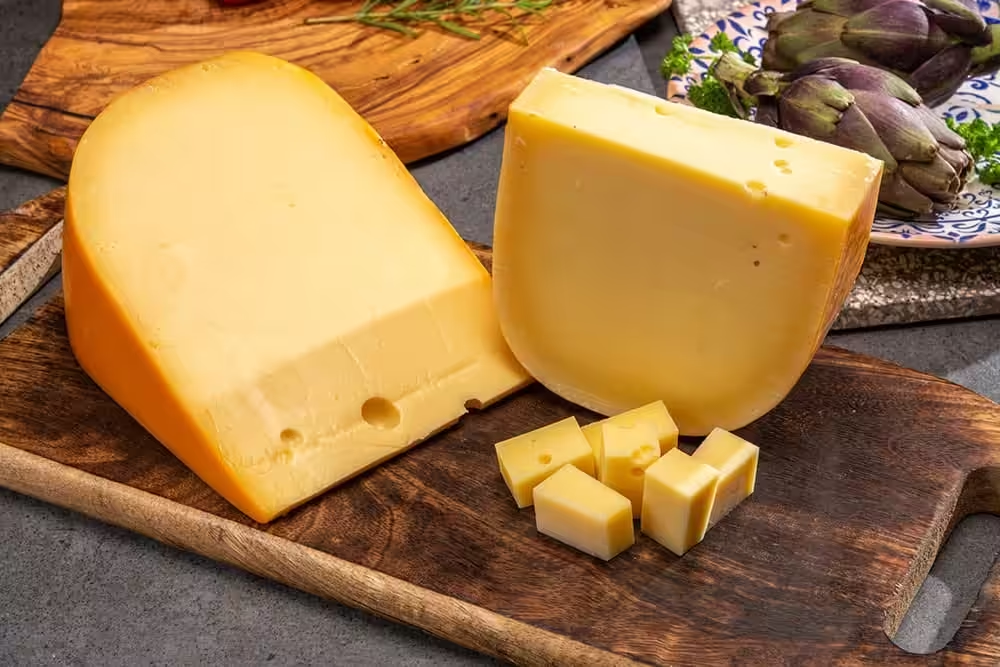
Where does the name Gouda come from?
The name refers to the city of Gouda, which was the heart of the Dutch cheese trade in the 17th century. This was where cheeses were bought, sold and exported. The cheese was originally called ‘zoetemelkse kaas’ (sweet-milk cheese), but the name Gouda quickly became the common term, and it has stayed that way ever since.
One important thing to know: Gouda is not a protected name. That means anyone in the world can make and sell cheese under the name ‘Gouda’, as long as the recipe is right. This explains why you can find Gouda in almost every country, but also why the quality can vary enormously.
The Gouda Holland quality mark
To protect authentic Dutch Gouda, the European Union awarded the Protected Geographical Indication (PGI) quality mark to Gouda Holland in 2010. When you see this mark on a cheese, you can be sure it is made from:
- 100% Dutch milk
- From Dutch cows
- Made and matured on Dutch soil
Want to know more? Read our article about the Gouda Holland quality mark.
Gouda vs. Noord-Hollands cheese
There’s an important difference here that many people don’t know about. Noord-Hollands cheese is Gouda, but made exclusively from milk produced in Noord-Holland. This gives the cheese its own distinct character: creamier, fuller and slightly sweeter and fruitier than a standard Gouda.
At Cheese In A Box, we specialize in Noord-Hollands cheese. All cheeses are freshly cut and vacuum-sealed, so you enjoy the same quality at home as you would from a cheesemonger at the market.
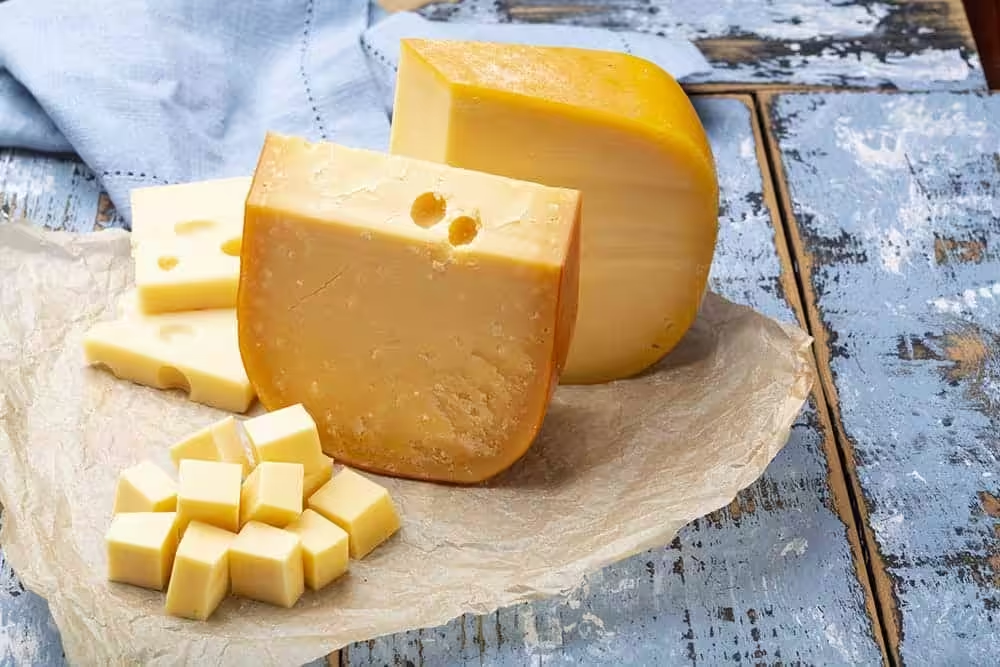
Types of Gouda: from young to extra-aged
There are many different Gouda cheeses. The biggest difference comes down to aging time. The longer a cheese ages, the more moisture it loses. This makes the flavor stronger, saltier and sharper, and the texture firmer.
Aging time overview (for a 12 kg wheel)
- Young cheese – 1 month: mild and creamy
- Semi-mature – 2 months: a little more flavor, still soft
- Mature – 4 months: full flavor, lightly sharp
- Extra mature – 6 months: bold and firm
- Aged cheese – 10 months: intense and crumbly
- Extra-aged cheese – 24+ months: very bold, with a flaky, granular texture
The larger the wheel, the longer the aging time. A small 4-kilo cheese ripens faster than a large 16-kilo wheel.
Herb varieties
On top of aging time, added ingredients create even more variety. Think cumin cheese, cheese with Italian herbs, or even truffle cheese. The base recipe stays Gouda, but the flavor experience is different every time.
How to store Gouda cheese
Gouda keeps best in the fridge, wrapped in cheese paper or plastic wrap. Take it out of the fridge half an hour before eating; the flavors really come into their own at room temperature.
Vacuum-sealed cheese keeps for weeks in the fridge. Once opened, it’s best enjoyed within 5 to 7 days.
Want to taste Gouda for yourself?
Curious about the difference between a young Noord-Hollands cheese and an extra-aged farmhouse cheese? At Cheese In A Box, you can choose from a wide range of Gouda cheeses. Or let yourself be surprised with a cheese subscription, delivering a carefully curated selection to your door every month.
Prefer to read more first? Find out what farmhouse cheese is and why it’s so special.
Ready to try the real thing? Order artisanal cheese from Cheese In A Box.
Frequently asked questions about Gouda cheese
What exactly is Gouda cheese?
Gouda cheese is a Dutch 48+ hard cheese made to a fixed recipe with rennet, curd and brine. Shapes range from a round wheel to a rectangular loaf, with weights between 2.5 and 16 kilos.
What is the difference between Gouda and North Holland cheese?
North Holland cheese is a Gouda made exclusively from North Holland milk. That makes it creamier, fuller and a touch sweeter than standard Gouda. At Cheese In A Box you’ll mostly find North Holland varieties.
What does the Gouda Holland mark mean?
The Gouda Holland mark is a European Protected Geographical Indication (PGI) granted in 2010. It guarantees the cheese is made from 100% Dutch milk, from Dutch cows, matured on Dutch soil.
How do you store Gouda cheese best?
Keep Gouda in the fridge, wrapped in cheese paper or cling film. Take it out half an hour before eating so the flavour can develop. Vacuum-packed it keeps for weeks; once opened, eat within 5-7 days.