

You’ve just picked up a beautiful selection of cheese and want to enjoy it over the next few days. But how do you store it so the flavor and texture stay at their best? The short answer: not in plastic wrap.
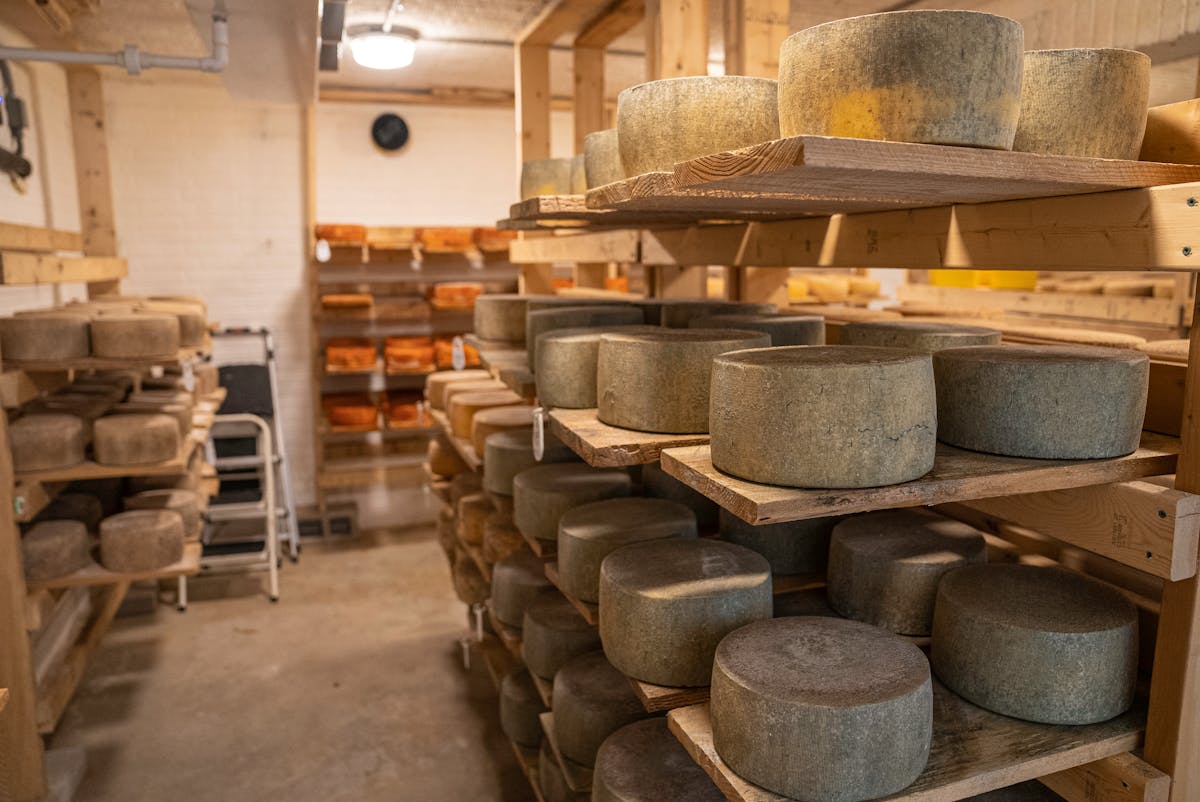
Why plastic wrap doesn’t work
Cheese is alive. It breathes, it keeps ripening, it releases moisture. Plastic wrap shuts all of that down. The moisture the cheese gives off has nowhere to go, so the cheese turns clammy, starts to sweat and loses flavor. With soft cheeses, it can even develop off-putting smells you definitely didn’t sign up for.
Cheese paper is the answer
Cheese paper (also known as double-layer cheese wrap) is specially designed for storing cheese. The inner layer retains just enough moisture, while the outer layer lets the cheese breathe. That way the cheese stays moist enough not to dry out, while excess moisture can still escape.
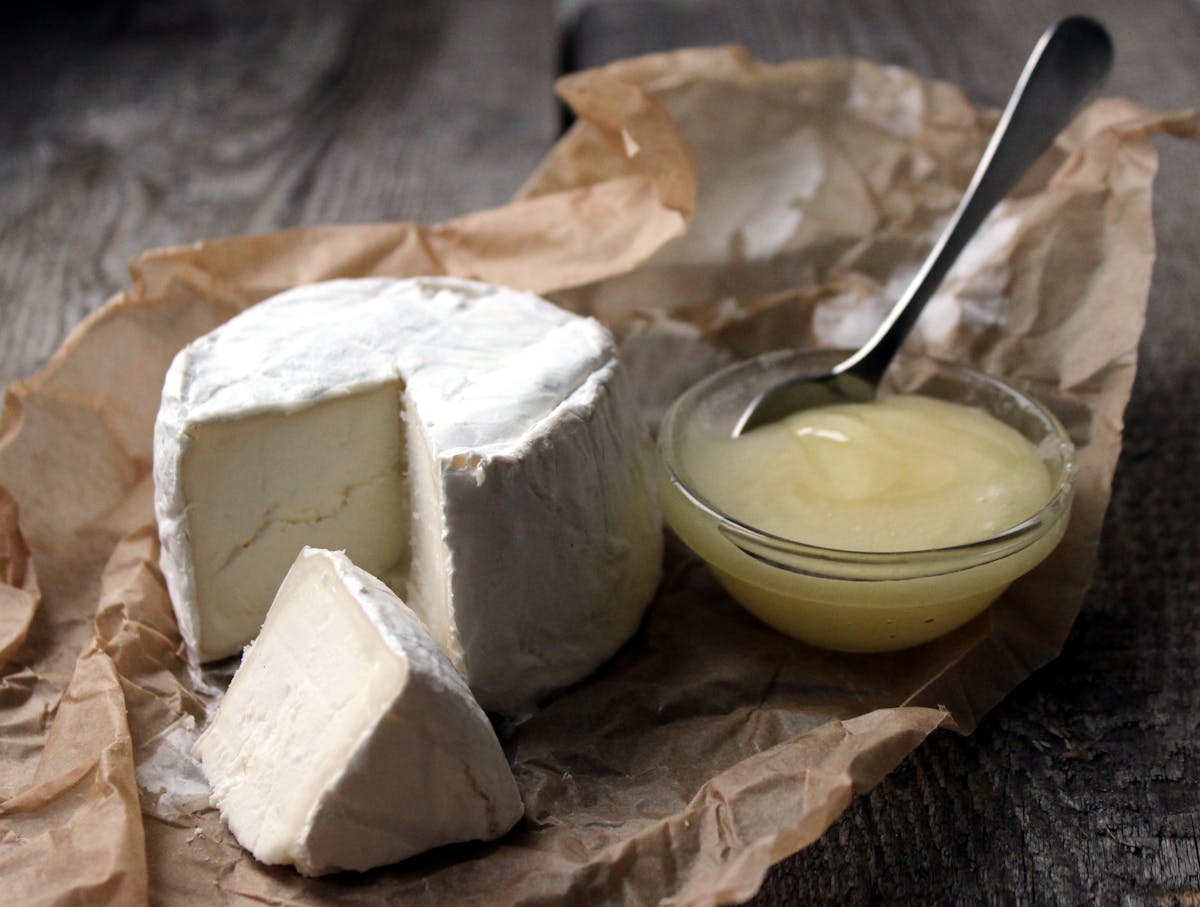
At Cheese In A Box we include free cheese paper with every order. Not as a little extra, but because we believe good cheese deserves to be stored properly.
Storage by cheese type
Hard and semi-hard cheeses
Think Gouda, Parmesan, Gruyère. Wrap them in cheese paper and store in the crisper drawer of your fridge. It’s a little more humid there, and the temperature is more consistent than on the main shelf. Stored this way, hard cheeses keep easily for 3 to 6 weeks.
Soft cheeses
Brie, camembert and other soft cheeses should also be wrapped in cheese paper, but eat them sooner. Soft cheese ripens quickly in the fridge. Aim to finish them within 1 to 2 weeks for the best flavor.
Blue cheeses
Blue cheeses like Blue Shropshire or Roquefort should be kept away from other cheeses. The mold cultures can transfer. Wrap tightly in cheese paper and store in a sealed container.
Fresh cheeses
Mozzarella, ricotta and other fresh cheeses should be kept in their own liquid and eaten as soon as possible. No more than 3 to 5 days in the fridge.
The ideal temperature
Cheese likes to be cool but not too cold. The ideal storage temperature is 4 to 8 degrees Celsius. The crisper drawer of your fridge usually falls right in that range. Never store cheese in the freezer compartment or against the back wall of the fridge, where it gets coldest.
Can you freeze cheese?
You can, but it’s not ideal. Freezing changes the texture of cheese because moisture crystals form and expand. Hard cheeses hold up best, but they do become a bit crumbly. Soft cheeses often turn watery after thawing.
If you do want to freeze cheese: cut it into portions, wrap them tightly in cheese paper and then place in a freezer bag. Thaw slowly in the fridge, never on the counter.
Want to learn more about the different types of cheese? Check out our article on what farmhouse cheese actually is and why it tastes different from factory-made cheese.
Before serving
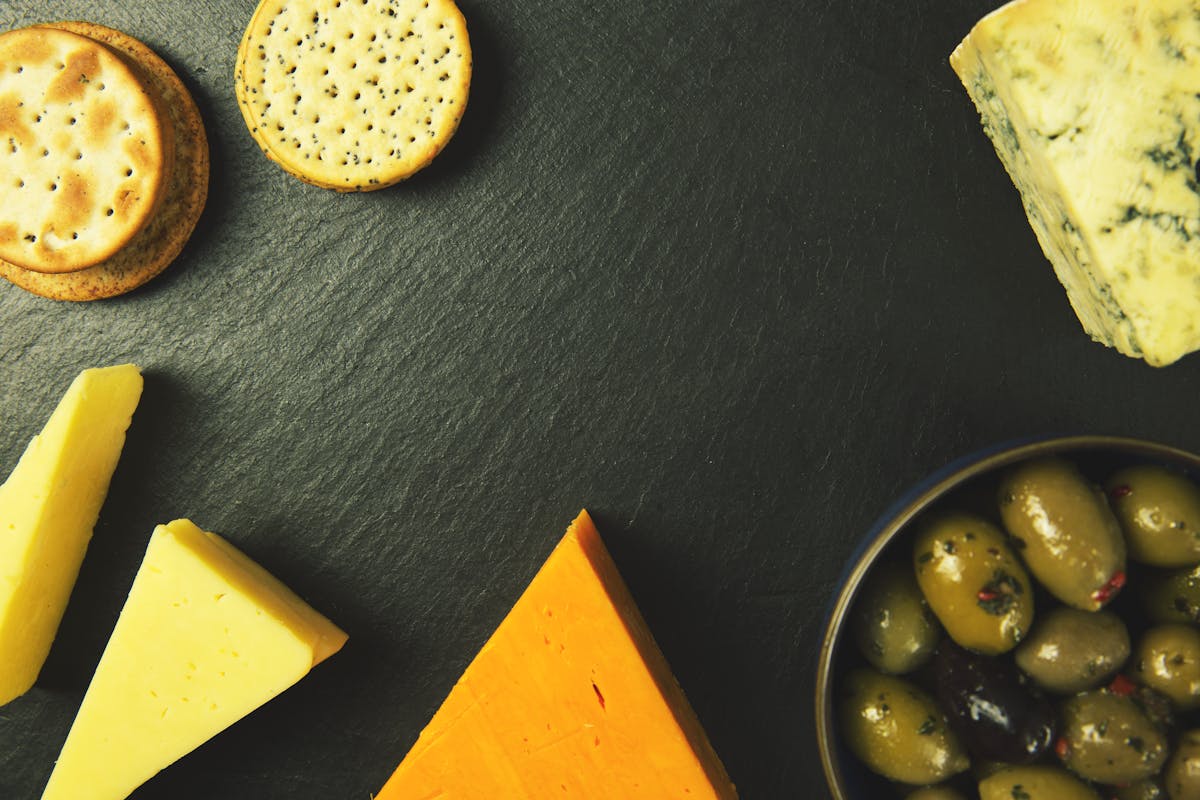
Always take cheese out of the fridge at least 30 minutes before eating. Cold cheese tastes flat. At room temperature, all the flavors and aromas open up. With soft cheeses you’ll notice the difference straight away: a cold Brie is firm and bland, a Brie at room temperature is creamy and full of flavor.
Want to taste for yourself?
At Cheese In A Box we carry these cheeses, freshly cut to order:



More to read about cheese?
Browse all our articles about artisan cheese, recipes and tips.
More articles
Raw milk cheese: why connoisseurs prefer it
Raw-milk cheese has a more complex, deeper flavor than pasteurized cheese. Discover why and which raw-milk cheeses you should try.
Read more →What is brie?
What exactly is brie, what’s the difference between camembert, and can you eat it during pregnancy? Discover everything about this French white-rind cheese and how to serve it perfectly.
Read more →White-rind cheese: varieties, flavor and the best pairings
White-rind cheese is instantly recognizable by its soft, white rind. From creamy brie to intense camembert: discover which varieties exist, how they taste, and how to serve them at their best.
Read more →