

Cheese and wine are one of those combinations that always works. At least, when you make the right choices. A full-bodied red wine with a mild young cheese? That’s not going to work. The wine completely overpowers the cheese. The reverse is equally true: a delicate white wine next to a crumbly aged cheese just disappears into nothing.
The basic rule
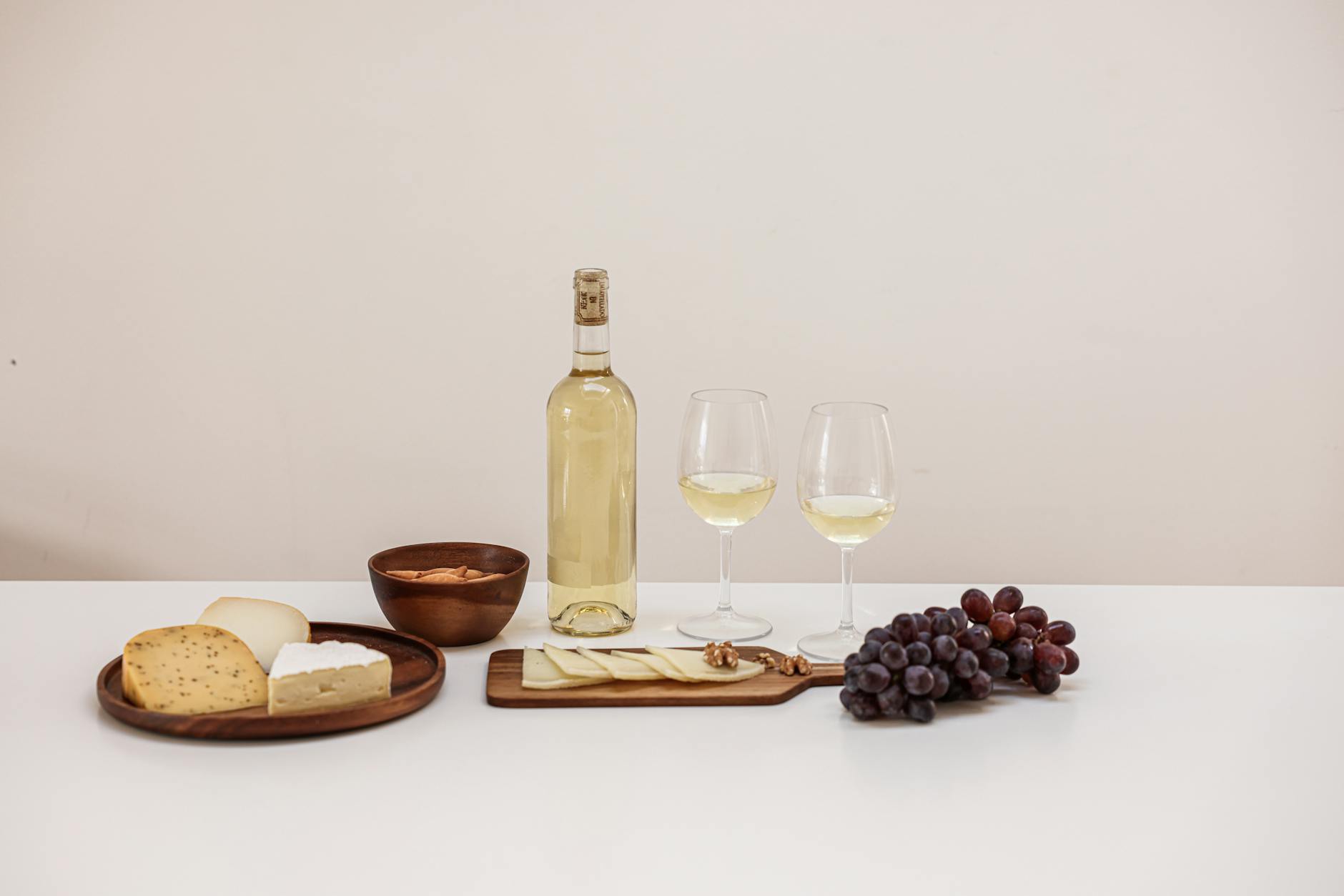
The most important rule for pairing cheese and wine is simple: match intensity with intensity. Mild cheese with a light wine. Bold cheese with a full-bodied wine. Sweet wine with salty cheese. When the flavor intensities are in the same ballpark, they lift each other up instead of competing.
Pairings that always work
Young cheese + dry white wine
A young Gouda or a soft goat cheese pairs beautifully with a Sauvignon Blanc or a dry Riesling. The crisp acidity of the wine cuts right through the creamy fat of the cheese.
Mature cheese + light red wine
A Noord-Hollands mature cheese with a Pinot Noir or a light Merlot. The cheese has enough character to hold its own next to the wine, but neither one dominates.
Aged cheese + full-bodied red wine
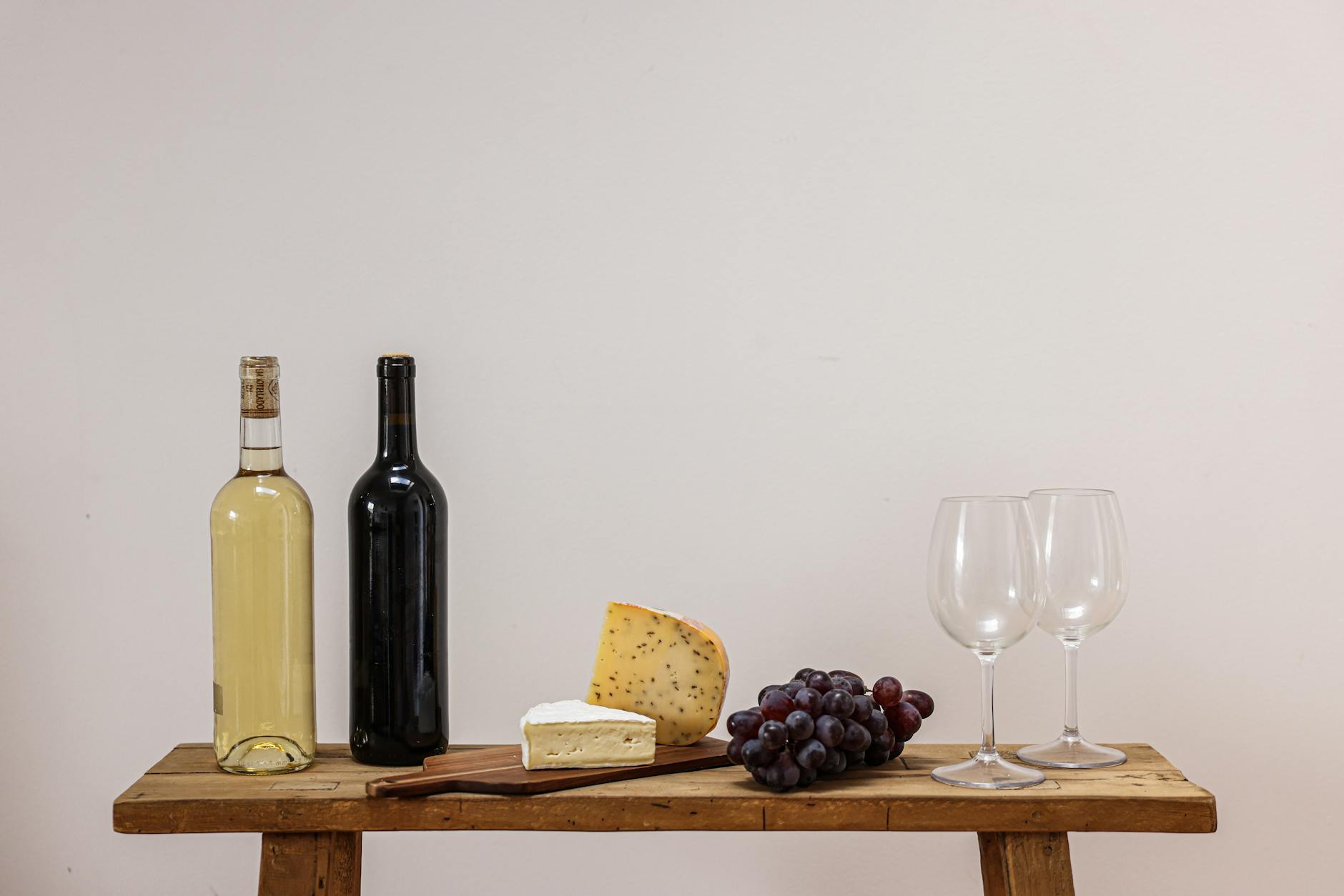
An aged farmhouse cheese, with its crystals and intense flavor, can stand up to a sturdy glass of Cabernet Sauvignon, Barolo or Rioja. The tannins in the wine and the salt crystals in the cheese find each other perfectly.
Blue cheese + sweet wine
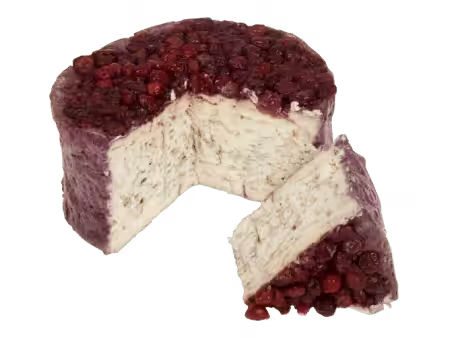
This might just be the most surprising pairing of all. A piece of Blue Shropshire with a glass of port, Sauternes or a late-harvest Riesling. Sweet and salty together is absolute heaven.
Soft cheese + Champagne
Brie or Camembert with a glass of bubbles is a French classic. The fine mousse and acidity of the Champagne cleanse your palate between every bite of creamy cheese.
Truffle cheese + Barolo
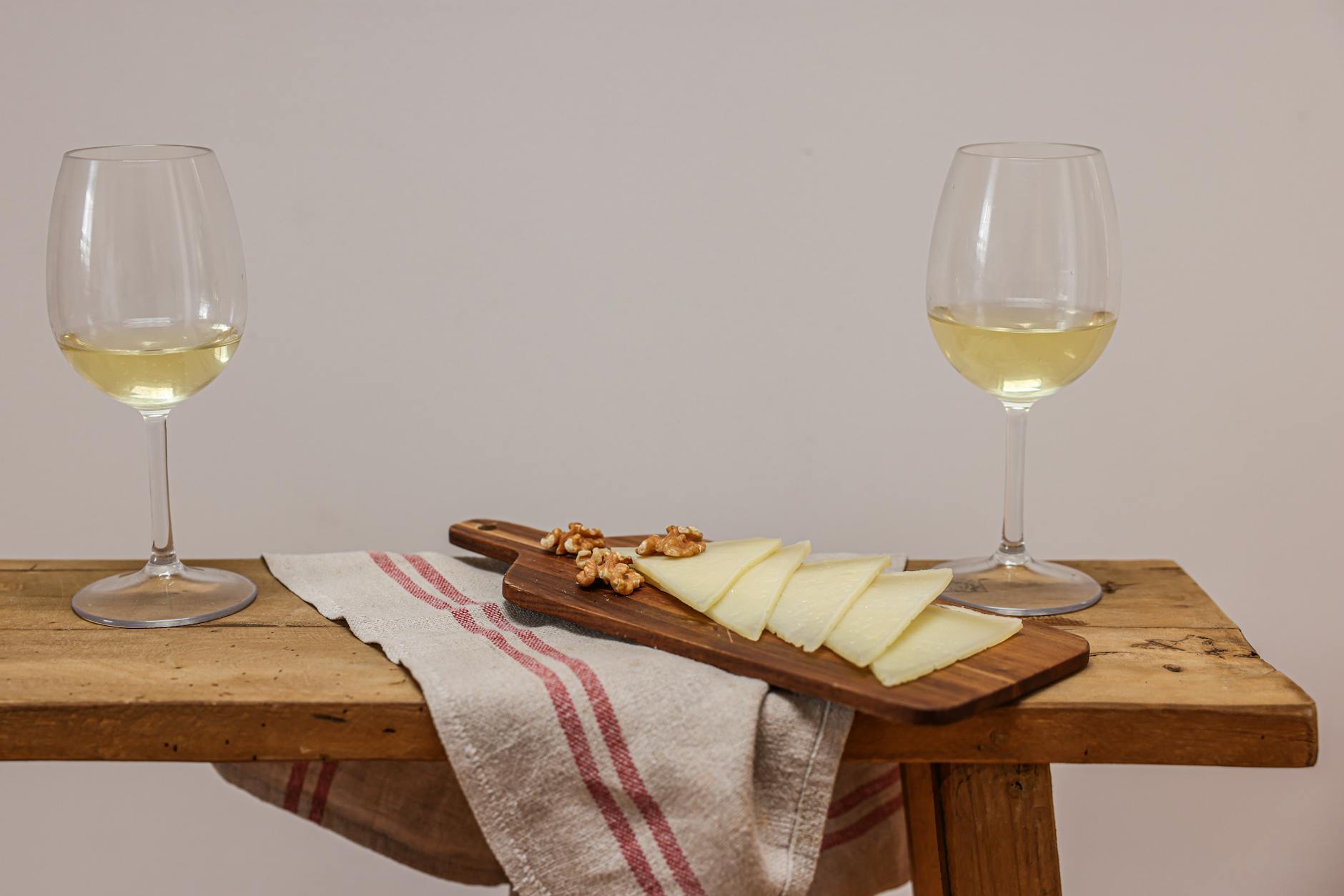
Our truffle cheese with a glass of Barolo is pure luxury. The earthy truffle notes in the cheese resonate with the complex aromas of the wine.
Common mistakes
- Too-heavy red wine with soft cheese: the tannins make the cheese taste bitter. Go for white wine or bubbles instead.
- Red wine only: white wine is actually the better choice with most cheeses. The acidity in white wine acts as a flavor enhancer.
- Too many cheeses at once: for a cheese and wine evening, pick 4 to 5 cheeses and an equal number of wines. More than that gets chaotic.
How to host a cheese and wine evening
Start with the lightest pairing and work your way up to the boldest. So: goat cheese + Sauvignon Blanc, then mature cheese + Pinot Noir, then aged cheese + Cabernet, and finish with blue cheese + port. Serve bread, nuts and fruit alongside. Curious how to put together a beautiful cheese board? Read more about that here.
Want to taste for yourself?
At Cheese In A Box, we carry these cheeses freshly cut in our range:

More to read about cheese?
Browse all our articles about artisan cheese, recipes and tips.
More articles
How to build the perfect cheese board
A great cheese board is all about balance between soft and hard, mild and bold. Learn how to put together the perfect combination for any occasion.
Read more →Noord-Hollands cheese vs Gouda: what’s the difference?
Noord-Hollands cheese is always Gouda, but Gouda isn’t always Noord-Hollands. Learn the difference and discover why connoisseurs choose Noord-Hollands.
Read more →Raw milk cheese: why connoisseurs prefer it
Raw-milk cheese has a more complex, deeper flavor than pasteurized cheese. Discover why and which raw-milk cheeses you should try.
Read more →